Organic Mattresses · Consumer Guide
Evaluating Luxury Natural Sleep Systems: Materials, Certifications, and Fit
A mattress is a compact landscape of fibers, foams, springs, and fabric. Its labels may promise nature, purity, or exceptional comfort, but the useful facts lie deeper: what each layer contains, how the bed is constructed, which claims are independently documented, and whether the finished sleep system suits the person who will use it.
For a prospective buyer, evaluating a luxury natural mattress is less about decoding grand language than asking a sequence of clear questions. What is in the comfort layer and support core? Are the materials and certifications specific? Does the mattress feel supportive in the positions you actually sleep in? Can it be cared for in a practical way? A disciplined comparison can make those questions easier to answer—without treating price or marketing language as a measure of quality.
Begin with the materials, layer by layer
A mattress can be described as natural while combining materials that differ considerably in origin, processing, performance, and documentation. The word alone does not tell you whether the whole mattress is made from natural materials, whether only one layer is, or how much of that material is present. Ask for a construction breakdown that identifies the upholstery, comfort layers, core, ticking, and any adhesives or fire barriers.
Materials commonly found in natural or organic mattress constructions include latex, wool, cotton, and coir. These names identify broad material families, not a complete specification. Latex, for example, can be made using different processes and may be blended with other ingredients. Cotton may appear in the cover, batting, or both. Wool might serve as a surface layer, a fire barrier, or an element within a more complex upholstery package. Coir—fiber made from coconut husks—may be used as a firm structural layer. The amount, placement, and processing of each material matter.
Look for a layer-by-layer description rather than a short list of impressive ingredients. If a mattress contains wool, find out where it sits and what it is intended to do. If latex is present, ask whether it is the entire comfort layer or part of a blend. If the product listing refers to a natural fiber cover, check whether the support core and other interior components are described separately. Vague descriptions do not prove that a product is poor, but they leave a buyer with less information to compare.
Construction is as important as the ingredient list. A spring system, a solid foam core, and a layered combination of materials can each provide a different feel. Pocket springs respond individually within their fabric pockets; continuous or interconnected spring constructions behave differently. Foam and latex layers can compress in ways that vary with their density, formulation, thickness, and position in the mattress. The term “natural” cannot predict how these systems will feel or how well a particular sleeper will find them suited to their needs.
Separate material descriptions from certifications
Certification can help verify a defined claim, but it is not a universal stamp of comfort, durability, or environmental virtue. Each standard has its own scope. One may address the contents of a particular material, another may assess emissions, and another may apply to a finished product or a facility. A certification attached to a component does not automatically establish that every part of the mattress meets the same requirements.
When a brand cites a mattress certification, look for the name of the organization, the specific standard, the product or component covered, and the status or validity of the documentation. If a certificate applies only to latex, for instance, that information should not be read as a certification of the cover, spring unit, adhesives, or complete mattress. Likewise, a logo without an explanation offers little help in judging what was assessed.
Use a simple verification routine:
- Identify the exact claim: organic content, restricted substances, emissions, manufacturing practices, or another attribute.
- Find the named certification program and learn what its standard covers.
- Check whether the certificate refers to the finished mattress or a specific ingredient or component.
- Confirm that the product, material, and manufacturer named in the documentation match the item you are considering.
- Ask the seller for accessible supporting information if the scope is unclear.
Words such as “eco,” “clean,” “pure,” and “green” may communicate a brand’s positioning, but they are not a substitute for named standards or complete material disclosure. “Organic” also needs context: a claim about one fiber is narrower than a claim about an entire finished sleep system. Careful reading helps keep a valid, limited certification from being mistaken for a guarantee about every feature of the mattress.
This is not a reason to dismiss certifications. Independent standards can make some claims more transparent and easier to compare. The key is to treat a certification as evidence about a defined question, not as a shortcut for deciding whether a bed is comfortable, suitable, or worth its cost.
Understand what natural fibers can—and cannot—tell you
Fibers shape a mattress in several ways. They can change how the surface feels, how air and moisture move through the upholstery, and how the layers respond to pressure. Wool, cotton, silk, cashmere, and other fibers each have different characteristics, but their names alone cannot reveal how a finished mattress will perform. Blend, quantity, density, quilting, and the surrounding construction all influence the result.
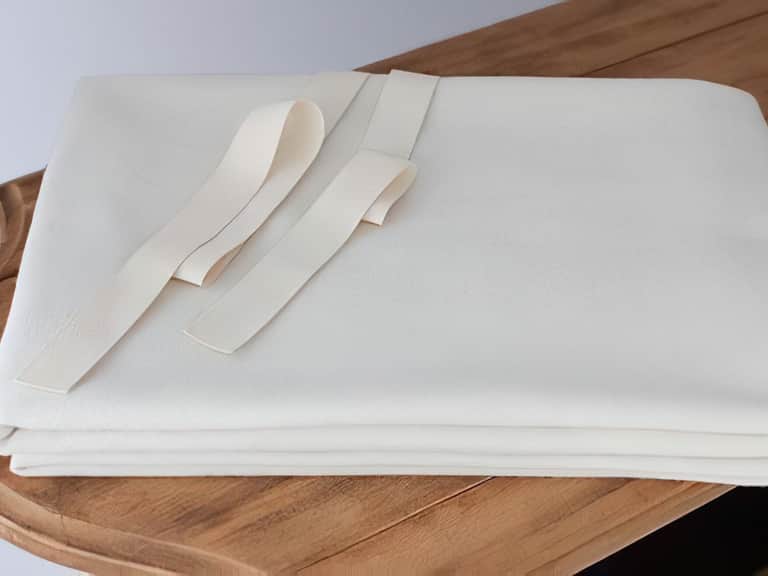
Wool is often used in bedding because it can provide loft and a cushioned feel. Some mattress pads and toppers are designed to add a fiber layer over an existing mattress, rather than provide the main support structure. For example, the [Savvy Rest Wool Mattress Pad](/products/savvy-rest-wool-mattress-pad-573) is described as a densely woven wool layer with removable cotton corner ties. Its product information identifies hand washing and line drying as care requirements. Those details make it possible to evaluate its stated material, fit, and upkeep without assuming that the pad will change the underlying support of a mattress.
A topper is also not the same thing as a mattress. It may alter the surface feel, but it cannot reliably correct every mismatch in firmness or support, and it does not replace an assessment of the core. A thick or lofty layer may compress under a sleeper’s weight; the effect depends on the topper and the person using it. Consider a topper as a separate component with its own materials, dimensions, attachment method, and cleaning instructions.
Natural fibers should not be treated as automatic proof of hypoallergenic performance, safer sleep, or a medical benefit. People can have individual sensitivities, and product claims should be assessed against the specific material and available documentation. If a health condition or allergy affects a buying decision, consult a qualified healthcare professional for personal guidance rather than relying on broad product language.
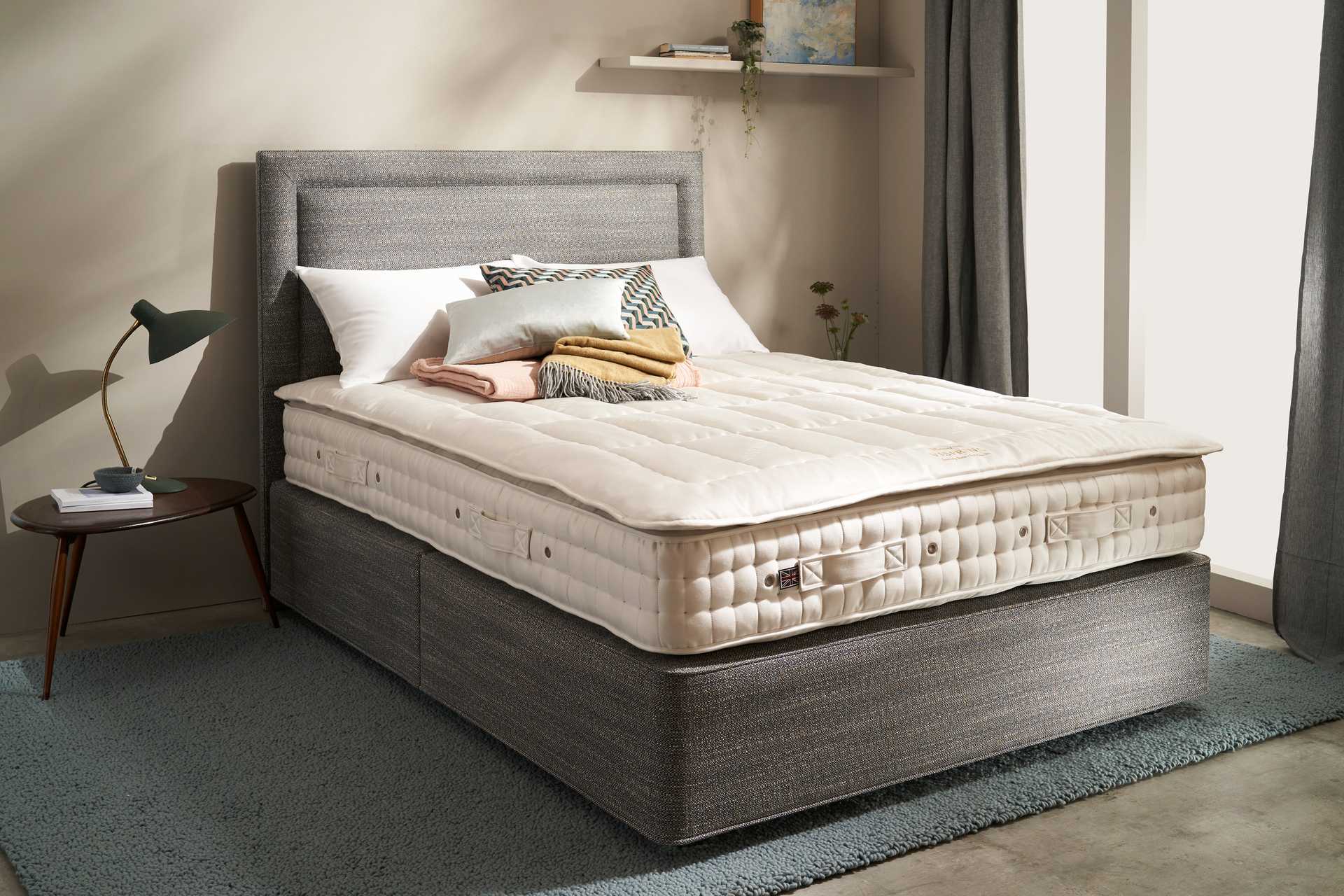
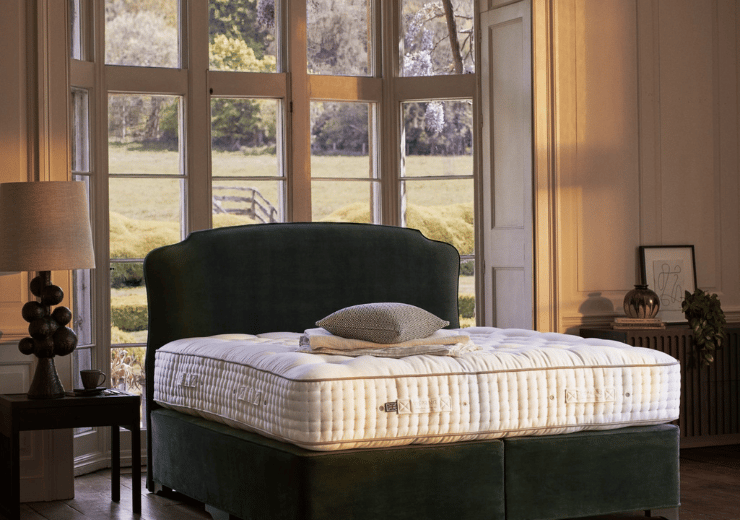
Luxury products sometimes combine multiple fibers in carefully arranged layers. The [Vispring Opulence Mattress](/products/vispring-opulence-mattress-4014), for example, is described with cashmere, alpaca, bamboo, silk, wool, cotton, horsetail, and a hand-nested spring construction. That detailed list helps a reader understand the stated composition and construction. It does not by itself establish that the mattress will suit every sleeper, carry a particular certification, or provide a specific level of long-term comfort. Those questions require separate evidence and, where possible, a personal fit assessment.
Fit is personal: support, pressure, and sleep position
There is no single firmness that is right for everyone. Body shape, weight distribution, sleep position, mobility, temperature preference, and personal comfort all contribute to how a mattress feels. The label “medium” may help describe a manufacturer’s scale, but firmness ratings are not necessarily standardized across brands. One company’s medium can feel different from another’s.
Support and surface comfort are related, but they are not interchangeable. A mattress may feel plush at the top while relying on a firmer core beneath. Another may feel relatively even across its layers. A useful test is to notice whether the surface allows pressure-sensitive areas, such as shoulders and hips, to settle comfortably while the body feels adequately supported. A mattress that feels soft in a showroom may feel different after several nights at home, especially when the foundation, bedding, and room temperature change the experience.
Sleep position can provide a starting point for testing, not a rulebook. Side sleepers may focus on whether the shoulder and hip feel uncomfortably compressed. Back sleepers can notice whether the lower body seems to sink or whether the surface feels too rigid. Stomach sleepers may prefer a surface that does not allow excessive sinking around the middle. People who change positions should test more than one posture.
For couples, consider motion transfer, usable surface area, and whether each person has similar preferences. If needs differ substantially, a shared mattress may involve compromise or a configuration that allows different sides to feel distinct. Edge stability may matter to people who sit on the side of the bed or use most of its width. These are practical fit questions, not properties that can be inferred from a natural-material label.
Whenever possible, review the return or trial policy before purchase and read the conditions carefully. Check how long a trial lasts, whether an adjustment period is expected, what fees or pickup arrangements may apply, and whether the policy changes for custom sizes or made-to-order products. A generous-sounding promise may include important conditions. The ability to reassess a mattress at home can be especially useful because first impressions are not always reliable predictors of comfort over time.
Check dimensions, foundation, and the complete sleep system
A mattress is part of a system that includes its base, frame, protector, pad, sheets, and the room in which it is used. Confirm the mattress dimensions against the bed frame and foundation rather than relying only on size names. Standard labels can hide differences in depth or shape, and a tall mattress may require deeper sheets. Check the manufacturer’s requirements for platform spacing, adjustable bases, slats, and center support.
Foundations influence how a mattress is supported. A base that is incompatible with the mattress may affect performance or warranty coverage. Ask what kind of foundation is permitted and whether the support requirements are stated in writing. If you plan to use an adjustable base, confirm compatibility for the specific mattress model and size.
Protectors and pads can change the surface feel, fit, and care routine. A fitted protector must accommodate the mattress depth, and its fabric may influence how the surface feels. A cushioned pad may add softness; a thinner cover may be intended primarily to protect against everyday wear. Check whether the product is waterproof, breathable, washable, or designed for a particular depth instead of assuming those features from its name.
Layering can also affect the qualities that led you to choose a mattress. A thick pad may soften the feel, while a tightly fitted protector may change the surface in a different way. If temperature is a concern, consider the full combination of mattress upholstery, protector, sheets, blankets, room climate, and individual preferences. No one material guarantees that every sleeper will feel cool or warm in the same conditions.
Durability, maintenance, and the limits of warranty language
Durability is difficult to judge from a short product description. Ask about the materials’ placement and construction, the support system, the care instructions, and what the warranty actually covers. A long warranty does not necessarily mean the mattress will maintain the same feel throughout that period, nor does it mean every change in comfort qualifies for repair or replacement.
Read the warranty before buying. Look for the length of coverage, the definition of a defect, exclusions, required proof of purchase, and conditions involving the foundation or protective cover. Understand whether transportation or inspection charges may apply. A warranty is a contract with specific terms; it should not be treated as an unconditional promise of a particular lifespan.
Care requirements can shape whether a natural mattress is a practical choice. Some toppers are washable; others require spot cleaning, hand washing, professional cleaning, or careful airing. Certain materials should not be soaked or exposed to high heat. Follow the manufacturer’s instructions, and do not assume that a removable cover means the inner mattress can be washed. If routine upkeep feels unrealistic, that is relevant information—not a minor detail to postpone until after purchase.
Ask whether the mattress should be rotated, and whether it can be flipped. Many designs are intended for use on one side only, while others may allow different care practices. Do not rotate or flip a mattress simply because that was customary with another bed. Use the specific instructions for the product you own. A well-fitted protector may help guard against some spills and everyday soil, but it does not eliminate the need to follow care guidance.
Natural does not mean maintenance-free, and premium construction does not guarantee that a mattress will remain unchanged. Materials compress and settle with use. A clear care plan, realistic expectations, and documented warranty terms are more useful than an unsupported promise of permanence.
A neutral comparison checklist
When comparing two or more options, record the same information for each. A short, consistent checklist reduces the influence of memorable slogans and makes missing details visible.
Materials and construction
- Are the comfort layers, core, cover, and other components individually described?
- Are material blends and processing details disclosed where relevant?
- What type of support system is used?
- Are adhesives, barriers, or other components addressed in the documentation?
Evidence and claims
- Which claims are supported by named certifications or documents?
- Does each certification apply to the finished product or just one component?
- Are terms such as “natural” and “organic” clearly defined?
- Can the seller provide further information when a claim is unclear?
Fit and compatibility
- Can you test the mattress in your usual sleep positions?
- Does the size and depth suit your bed frame and bedding?
- Is the foundation or adjustable base compatible?
- Are the trial and return terms clear and manageable?
Care and ownership
- Can you follow the care instructions with the time and equipment you have?
- What does the warranty cover, and what conditions apply?
- Will a protector or topper affect feel, fit, or maintenance?
- Are delivery, setup, and disposal terms clear?
Where information is unavailable, mark it as unknown rather than filling the gap with an assumption. This makes a comparison more honest. It may also give you a useful list of questions to send to the seller before making a decision.
Price and luxury positioning are not evidence
Luxury can describe a design intention, a set of materials, skilled workmanship, a brand position, or some combination of these. It is not a standardized mattress grade. A high price may accompany elaborate construction or scarce materials, but it does not prove that a mattress is the right fit, that its environmental claims are verified, or that it will last longer than a less expensive alternative.
Instead of comparing price in isolation, compare the documented features and the conditions of ownership. Are the materials and construction specific? Is the certification scope transparent? Can you test the feel? Do the return policy, warranty, and care instructions suit your situation? If an answer is missing, decide whether that uncertainty is acceptable before purchase.
This approach does not require dismissing craftsmanship or high-quality materials. It simply keeps those qualities in their proper place: relevant factors to evaluate, not substitutes for information about comfort, construction, and evidence. A mattress may be beautifully made and still feel wrong to a particular sleeper. Another may have a simpler description yet meet that person’s needs more effectively.
A three-step way to make the decision
For a practical framework, organize the research around three questions: What is it made of? What evidence supports the claims? Does it fit your body, bed, and everyday routine?
- Map the materials. Write down the layers and support system, noting details that are missing. Treat “natural” or “organic” as a prompt for clarification rather than a complete answer.
- Verify the claims. Identify the certification or documentation, check its scope, and separate verified facts from general brand language.
- Test the fit. Consider sleep position, pressure, motion, dimensions, foundation compatibility, care, and the practical terms for trying or returning the mattress.
The framework is deliberately simple. It cannot predict exactly how a mattress will feel after years of use, but it can make the decision more transparent and help prevent a striking label or polished description from carrying more weight than it deserves.
The clearest label is the one you can verify
Choosing a luxury natural sleep system means navigating both physical sensations and technical claims. Fibers and construction determine how a mattress is assembled; certifications clarify particular standards; fit depends on the sleeper and the surrounding bed setup. These are related questions, but none can stand in for the others.
Start with the ingredients, ask what the documents actually certify, and test the feel against your own needs. Read the care instructions and warranty before the purchase, not after. Compare products using the same criteria, and leave uncertain claims marked as uncertain. The result may be less dramatic than a grand promise—but it is a far more dependable foundation for a decision.