Mattress Buying Guide
How Organic Wool Influences Comfort in Natural-Fiber Sleep Systems
A mattress is more than a single material beneath a sheet. Its layers work together to shape pressure relief, support, temperature, and feel. Wool can add softness and help manage moisture, but its effect depends on where it sits, how it is constructed, and what surrounds it.
In a natural-fiber sleep system, comfort is built in layers. A cover touches the sleeper; cushioning materials soften the surface; and a support core helps carry body weight. Organic wool may appear in one or several of those layers, sometimes alongside cotton, latex, or springs. Its presence can influence how the mattress feels, but the word “wool” alone does not tell a shopper whether a bed will feel plush, firm, cool, or warm.
Understanding wool begins with a practical distinction: a material’s general properties are not a guarantee of a particular sleep experience. Fiber preparation, density, thickness, quilting, and the other materials in the mattress all matter. A thin wool layer in a spring mattress may behave differently from a thick batting layer above latex. Care instructions and certification details matter, too. Looking at the whole construction gives a more useful picture than relying on a broad natural-material claim.
What wool contributes to a mattress
Wool is a natural animal fiber used in bedding for its cushioning, resilience, and ability to interact with moisture. In a mattress, it is usually processed into batting, felt, or another layered filling, then secured inside the cover. Depending on its thickness and arrangement, wool may soften the first impression of the bed, create a more gradual transition into firmer support layers, or help keep the upholstery materials in place.
That cushioning is not the same as the deep, body-contouring sensation associated with some thick foam layers. Wool often compresses under load and can give a surface a gently padded feel, but the degree of contouring varies with construction. A sleeper’s weight, preferred position, and the firmness of the layers underneath also influence the result. The same wool-filled design can feel different to different people—and even different from one mattress model to another.
Wool can also take up and release moisture as conditions change. In bedding, that quality is often discussed as part of temperature and humidity management. It should not be mistaken for an active cooling system or a promise that a mattress will prevent sweating. Room temperature, bedding, sleepwear, personal physiology, and the mattress’s full construction all contribute to the conditions around the sleeper.
Another important function is structural. Upholstery layers can shift or settle if they are not well secured. Some mattress makers use tufting, stitching, quilting, or other methods to hold fillings in place. Hand-tufting, for example, is a construction method, not a certificate of material quality. When evaluating a mattress, consider how layers are assembled as well as what those layers contain.
Organic wool is a sourcing claim to verify
“Natural” and “organic” are not interchangeable terms. Wool may be described as natural because it comes from an animal fiber, but that wording alone does not establish how the fiber was produced, processed, or handled. A claim that wool is organic should be accompanied by clear information about the relevant certification, the scope of that certification, and the finished product or supply-chain stages it covers.
Certification names can help consumers assess claims, but a logo is not a substitute for reading the details. Check what is certified: the wool fiber, the textile processing, the finished mattress, or a broader supply chain. Standards can differ in scope. If a product description says “certified organic,” look for the certifier and a precise explanation rather than assuming that every component has identical status.
It is also useful to distinguish organic certification from other kinds of claims. A certification may address organic production or processing, while a separate standard may address chemical restrictions, emissions, or manufacturing practices. One label does not automatically answer every question about animal welfare, environmental impact, indoor air quality, or product durability. Shoppers who care about a particular issue should check whether the documentation addresses that issue directly.
Ask for specifics when a description is vague. Does the mattress identify the wool’s origin? Is the wool certified, and by whom? Does the certification apply to the mattress or only to one component? Are other fillings or treatments used? Clear answers help separate verifiable information from broad marketing language without requiring shoppers to become textile specialists.
How wool works with latex, cotton, and springs
Natural-fiber mattresses are systems, not ingredient lists. Wool’s role depends in part on the layers beneath and above it. Cotton may form the cover or another textile layer. Latex can provide buoyant, resilient cushioning or support. A spring unit may add a responsive foundation. Each material has its own feel, and the combination—not the presence of one ingredient—determines how the mattress behaves.
Wool and latex
Latex is typically more resilient and responsive than a loose fiber filling. When wool sits above latex, it may soften the first contact while the latex underneath supplies a firmer or more springy feel. The balance depends on the thickness and firmness of both layers. A shopper comparing latex mattresses should ask how much latex is used, where it is positioned, and whether the stated firmness refers to the latex core, the finished mattress, or a general feel category.
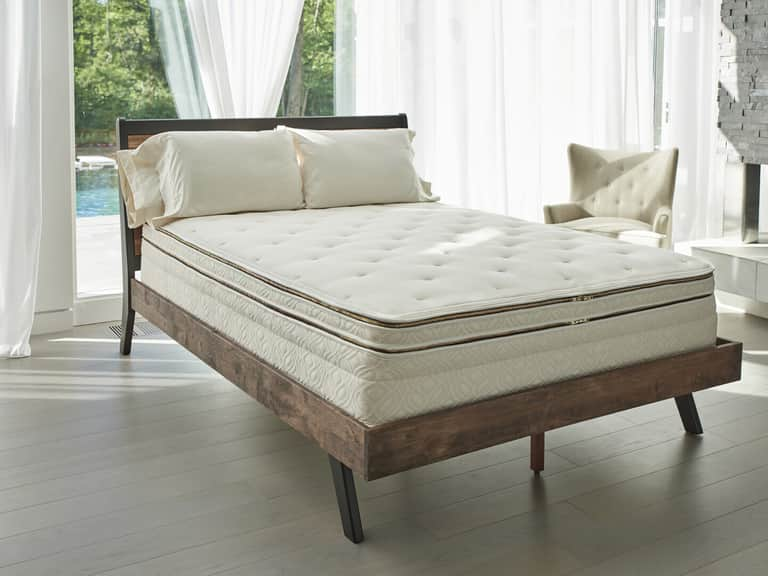
For an example of a layered design, the Naturepedic Arcadia Hybrid Organic Mattress is described as combining organic Dunlop latex with wrapped coils and a comfort layer that includes organic wool, alpaca, and cashmere. The product information also describes a cotton cover and, in some sizes, firmness choices by side. Those details illustrate why it is useful to examine the entire build: wool is one part of a multi-material system, not a stand-alone explanation of the mattress’s feel.
Wool and pocket springs
In a spring mattress, the spring unit provides a distinct source of support and responsiveness, while the upholstery above it shapes surface comfort. Wool may be part of that upholstery, along with other fibers. The number and arrangement of springs, their tension, the edge construction, and the thickness of the upholstery are all relevant when comparing beds. Wool cannot tell you whether a mattress is appropriately supportive for your body; that depends on the system as a whole and on personal fit.
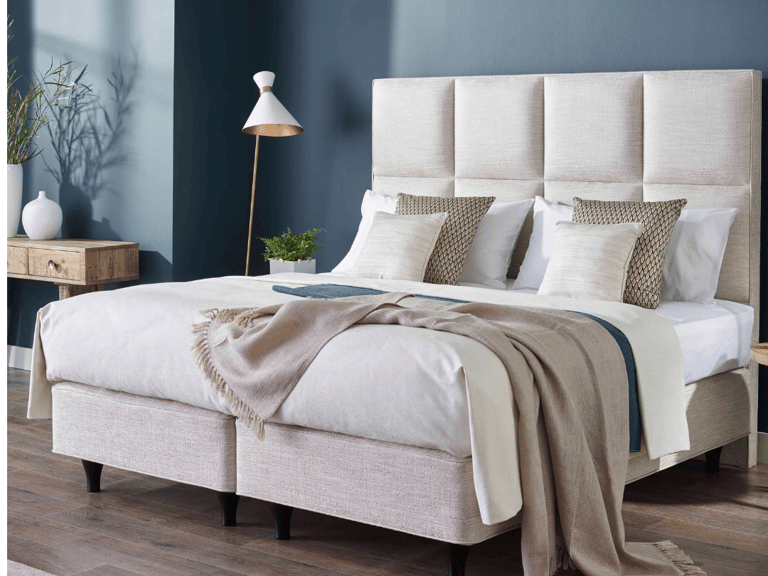
The Vispring Devonshire Mattress provides another example of wool used in a spring-based construction. Its description identifies British fleece wool among the natural fillings and describes hand-nested pocket springs with several firmness options. For shoppers, the useful lesson is not that one material determines comfort, but that upholstery, spring tension, and available firmness choices should be assessed together.
Wool and cotton
Cotton may be used in a mattress cover, a quilted textile, or a separate pad. It is not a direct substitute for wool, and the two fibers can have different functions in the same bed. When comparing natural-fiber constructions, identify which material is used for the outer fabric and which is used as fill. A phrase such as “cotton cover” does not indicate what is inside the mattress, just as “wool upholstery” does not specify the cover’s composition.
Comfort depends on construction, not labels
A mattress may be described as soft, medium, or firm, but firmness labels are not universal measurements. They can vary among manufacturers and may be affected by the support base, the mattress’s age, and the sleeper’s body shape and weight. Wool can influence the surface feel, yet it does not by itself define the firmness of a complete mattress.
Sleep position offers a starting point for testing, not a rigid formula. Side sleepers often look for enough cushioning to ease pressure at the shoulders and hips while retaining support through the torso. Back and stomach sleepers may prefer a surface that limits excessive sinking, though individual needs vary. Couples may have different preferences or body types, making split firmness or a compromise feel worth investigating. In each case, pay attention to the spine’s position and any pressure or discomfort during an in-person trial or the stated home-trial period.
Consider the bed base as well. A mattress placed on a suitable, supportive foundation may feel different from the same mattress on an incompatible base. Follow the manufacturer’s guidance about slat spacing, platform construction, and ventilation. A mattress that is not adequately supported can wear unevenly, and some warranties specify foundation requirements.
A practical checklist for assessing wool layers
Before comparing prices or choosing a model, gather the construction details. The following checklist can help turn a broad material claim into questions that have useful answers:
- Identify the wool’s location. Is it in the comfort upholstery, beneath the cover, in a quilted panel, or in another part of the mattress?
- Ask about thickness or quantity. A general reference to wool does not reveal how much is used or how substantially it may affect the surface feel.
- Find out how layers are secured. Quilting, tufting, stitching, and other assembly methods can affect stability and the mattress’s long-term feel.
- Verify certification claims. Look for the certifier, the certified component, and the scope of the standard rather than relying on an unqualified label.
- Review every major material. Note the cover, comfort layers, support core, adhesives or other components if disclosed, and any blended fibers.
- Check firmness choices and trial terms. Determine how the finished mattress feels to you and read the return, exchange, and warranty conditions carefully.
- Read the care instructions before buying. Confirm whether the cover is removable, whether spot cleaning is permitted, and whether the mattress can be rotated or flipped.
- Match the mattress to its foundation. Check the required support system and any ventilation recommendations.
Care, upkeep, and realistic expectations
Mattress care can be surprisingly different from bedding care. A removable wool-filled pad may have instructions that allow a particular kind of cleaning, while wool enclosed inside a mattress may not be washable at all. Never assume that a natural fiber can be washed simply because it is natural. Follow the manufacturer’s instructions for the complete product, especially when water, detergents, heat, or vigorous handling could affect the filling or construction.
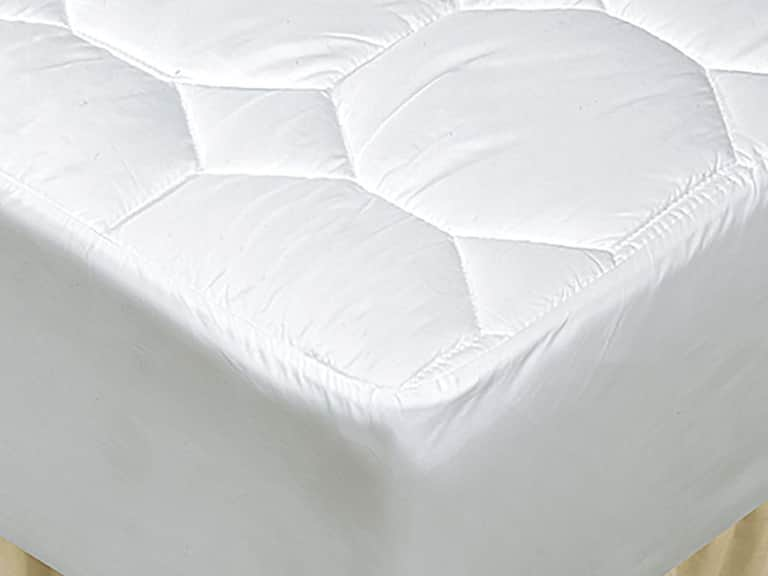
A mattress protector can help shield the surface from spills, body oils, and everyday soil, but check that it fits securely and suits your needs. A waterproof protector may offer a barrier against liquid; other protectors may focus more on light surface protection and airflow. A protector also adds a layer between the sleeper and mattress, so its fabric and construction may change the surface feel. For people choosing a wool mattress, the protector should not be treated as a substitute for the mattress’s care requirements.
Follow guidance on rotating or flipping. Some mattresses are designed to be used on one side only; others may allow rotation or flipping. A product description may specify a routine, but the instructions for the exact model should take precedence. Use a compatible base, keep the mattress dry, and address spills promptly according to the care directions. These measures can support general upkeep, but they cannot guarantee a particular lifespan.
Wool layers may compress with use. The extent and pace of change depend on the filling’s amount, construction, use, and the sleeper’s body. It is reasonable to ask a seller or manufacturer how the upholstery is secured and what changes to expect. Treat claims of permanent loft or unchanged comfort with caution: all mattress materials experience wear, and people’s needs may change over time.
Common assumptions worth checking
“Wool always makes a mattress cooler.”
Wool is often valued for managing moisture and helping create a balanced sleep environment, but it does not guarantee a cool sensation. The entire system matters, including the cover, other fillings, mattress depth, protector, sheets, room conditions, and personal comfort.
“Organic means every component is organic.”
Not necessarily. A product may contain a certified organic component while including other materials with different certifications or none stated. Look for documentation that names the component and explains the certification’s scope.
“More natural materials automatically mean better support.”
Material origin does not establish whether a mattress supports a particular sleeper well. Support depends on the core and overall construction, while surface comfort depends on the interaction of the comfort layers and the sleeper’s body. Testing and careful comparison remain important.
“Wool replaces a mattress protector.”
Wool upholstery is part of the mattress construction; it is not necessarily designed as a removable, washable barrier against spills. Check the product’s intended use and care directions, then decide whether a separate protector is appropriate.
Making a more informed choice
Organic wool can make a meaningful contribution to a natural-fiber sleep system: it may add cushioning, participate in moisture management, and form part of the upholstery that shapes a mattress’s surface. But its role is specific to the design. A small layer over latex, a generous filling above pocket springs, and wool inside a removable pad are three different arrangements, with different implications for feel and care.
For a confident comparison, begin with your priorities. Decide what matters most: pressure relief, a particular firmness, material transparency, ease of maintenance, or a combination. Then inspect the construction details, verify certifications, and read the care and warranty documents. If possible, test the mattress using your usual sleep position and allow enough time to notice pressure points and support. When testing is not available, make a written comparison of specifications and confirm the trial and return terms before ordering.
The most reliable question is not simply, “Does this mattress contain organic wool?” It is, “What does the wool do here, how is it combined with the other materials, and can I verify the claims?” That shift—from ingredient labels to complete construction—helps shoppers evaluate natural-fiber sleep systems with clearer expectations and a better understanding of the comfort they are choosing.