Bedding • Mattress materials • Buying guide
What to Check Before Choosing an Organic Wool Sleep Surface
Wool can bring softness, absorbency, and a distinctive feel to a bed—but the word “wool” alone reveals little about how a sleep surface will perform. Before choosing an organic wool mattress, topper, or pad, look closely at the layers, materials, care instructions, and fit. The construction beneath the sheet matters as much as the fiber named on the label.
Published November 27, 2026
Begin with the role wool plays
In a finished bed, wool may sit in several different places. It might form a comfort layer inside a mattress, fill a removable topper, appear as batting in a quilted pad, or be blended with other fibers in an outer covering. Those positions change what you feel, how the bed responds, and what kind of care it needs.
A wool comfort layer lies closer to the sleeper and contributes directly to the surface feel. A separate wool topper can add cushioning to an existing mattress, while a thin pad is more often a modest layer over the sleep surface. Wool used inside a mattress may be part of a construction that also includes latex, cotton, foam, springs, or other materials. In that case, its contribution cannot be understood in isolation.
Ask for a layer-by-layer description rather than relying on broad phrases such as “wool mattress” or “natural sleep system.” Find out where the wool is placed, how thick the layer is, whether it is quilted or needle-punched, and what supports it. A product description that says only “wool-filled” leaves important questions unanswered: How much wool is present? What is beneath it? Can the layer be removed? Is the cover washable?
This is the first useful distinction to make when comparing mattress materials. The same fiber can feel very different depending on its density, preparation, thickness, and relationship to the layers around it. Wool is not a single standardized comfort setting.
Separate cushioning from support
Softness at the surface and support through the mattress are related, but they are not interchangeable. A thick, yielding topper may change how pressure is distributed at the shoulders or hips. It does not necessarily correct a mattress that is sagging, too low for a sleeper’s preferences, or unsuitable for the bed frame.
Before adding wool, consider what you want to change. Is the current surface uncomfortably firm? Do you want a slightly more cushioned feel without replacing the mattress? Or is there a visible dip or loss of support? A topper can modify surface comfort, but it is not a dependable repair for a worn-out or damaged mattress.
Wool itself is compressible. Over time, repeated pressure can change the loft and feel of a wool-filled layer. Quilting, tufting, or other construction methods may help keep filling distributed, but they do not make a topper immune to settling. Ask the maker how the material is secured and what changes in thickness or feel are expected with use.
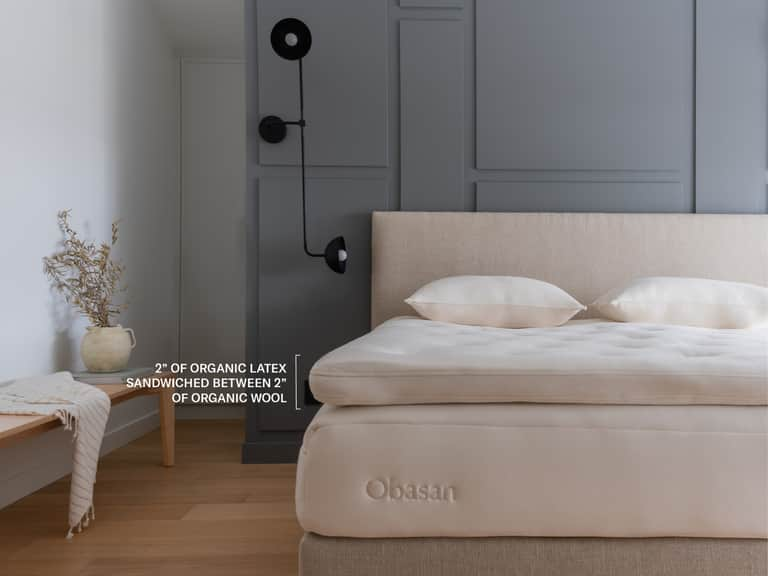
One example of a layered design is the Obasan Grand Organic Wool and Latex Mattress Topper, described as combining wool with an organic latex core. This illustrates why the complete construction matters: the surface response comes from the arrangement of both materials, not from wool alone. When assessing any such combination, check the stated thickness of each layer and whether the overall height will work with your sheets and mattress setup.
Read the complete material list
“Organic” is a meaningful claim only when you can identify what it applies to. It may refer to the wool, the cotton cover, another component, or a certified portion of the finished product. Read the specifications for every layer and distinguish the fill from the fabric enclosing it. A wool mattress topper, for example, might have wool filling inside a cotton cover; those components have different functions and may be governed by different claims.
Look for the fiber composition, the country or region of origin when provided, and any listed processing or finishing information. If the product is a blend, determine which fibers are included and, where available, their proportions. A label that names only the most recognizable material may not describe the whole sleep surface.
Certifications can help clarify particular claims, but they should not be treated as a universal guarantee of performance, comfort, or personal suitability. Check what the stated certification covers and which part of the product it applies to. For instance, a certification may concern organic textile content or a defined production standard; it does not tell you whether the firmness or thickness will suit your body and preferences.
Also distinguish an environmental or sourcing statement from a comfort promise. A material’s origin does not determine whether a person will find it too warm, too firm, too soft, or inconvenient to maintain. Clear information is more useful than a string of reassuring adjectives.
Think about temperature and moisture realistically
Wool is often valued for its ability to absorb moisture and for its use in bedding designed to support a comfortable microclimate. Those qualities can be relevant to people who notice changes in warmth or dampness during the night. But no fiber can guarantee a cool sleep, prevent night sweating, or resolve a health concern. Room temperature, bedding layers, sleepwear, humidity, mattress construction, and individual physiology all contribute to how a bed feels.
Consider the entire arrangement, from mattress to top sheet. A thick wool layer under a heavy duvet may create a very different experience from a thin pad beneath a light cover. If you tend to feel warm, examine the thickness and density of the layer, the cover fabric, and the rest of your bedding rather than assuming that a natural fiber will automatically feel cool.
Moisture management also does not mean waterproof protection. A wool-filled topper or pad may handle everyday humidity differently from a waterproof barrier, but it should not be assumed to stop spills from reaching the mattress. If protection from liquids is important, identify whether the product is explicitly described as waterproof and check how that barrier is constructed. A separate protector may be appropriate, though any additional layer can alter the feel of the bed.
As with any bedding choice, personal response is the best guide. Where possible, review the return, trial, and warranty conditions before purchase. Understand which changes are covered, how long the evaluation period lasts, and whether care requirements affect eligibility.
Check the care instructions before buying
Maintenance can be the deciding factor between an appealing material and a practical one. Wool-filled products may require spot cleaning, airing, rotation, or professional cleaning rather than routine machine washing. The correct instructions depend on the specific construction, so do not transfer care advice from one wool product to another.
Read the care label and the maker’s detailed guidance before purchase. Check whether the cover is removable, whether the complete item can be washed, and whether exposure to water or heat is restricted. If a topper must not be washed, consider how you will protect it from spills, body oils, and dust. A washable fitted sheet does not substitute for following the topper’s own care instructions.
For a fixed or integrated mattress layer, ask how the sleep surface should be aired, rotated, or turned, if those actions are recommended. Some mattresses have a designated top side and should not be flipped. Others may be designed for rotation. The manufacturer’s directions take precedence over general rules of thumb.
Care needs can also affect the useful life of a product. A layer that is difficult to clean may be less suitable in a household with frequent spills, pets, or children, even if its materials are otherwise appealing. Factor in the time, equipment, and cost associated with the stated care routine. Ease of upkeep is part of the buying decision, not an afterthought.
Measure the bed and check the fit
A sleep surface is only as practical as its fit. Measure the mattress length, width, and depth, including any existing topper or pad that will remain in place. Compare those measurements with the product’s finished dimensions and pocket depth. Standard size names can be helpful, but they do not guarantee an exact match across brands.
Thickness deserves particular attention. A substantial topper can raise the height of the bed, make fitted sheets difficult to secure, and change the distance from the mattress surface to the floor. If the mattress already has a pillow top or another comfort layer, adding more height may create an unstable or overly soft arrangement.
Check whether the item has elastic straps, a fitted skirt, or another attachment method. A layer that shifts during the night can feel uneven and require repeated adjustment. Ask whether the topper is intended for a particular type of mattress or base, and whether it is suitable for an adjustable bed. Do not assume a loose wool layer will stay in position on every surface.
For a mattress that is part of a larger setup, review the foundation requirements too. A supportive, compatible base helps the mattress perform as intended, while poor ventilation or an unsuitable frame may create problems unrelated to the wool itself. Confirm the maker’s requirements before changing the support system.
Know what “organic wool” does—and does not—tell you
Organic wool refers to sourcing and production criteria, not a guaranteed feel. It does not by itself specify softness, loft, density, durability, or how a sleeper will respond to the finished product. Nor does the word settle questions about the cover, stitching, dyes, adhesives, or other materials used in a layered sleep surface.
When organic sourcing is important to you, look for documentation that identifies the relevant standard and the component covered. If the product description is unclear, ask the maker for specifics. The goal is not to dismiss meaningful sourcing information, but to understand exactly what it confirms—and what remains a matter of construction and personal preference.
People with sensitivities should be especially careful not to rely on a broad “natural” or “organic” label as a substitute for a full materials list. Check the wool, cover fabric, finishes, and any backing or inner layers. If you have a diagnosed allergy or medical concern, consult a qualified health professional about your individual needs.
It is also useful to look beyond the fiber name when considering durability. Stitching, quilting, layer attachment, cover strength, and the ability to protect the product all influence how a sleep surface holds up. A well-described product makes it possible to compare those details rather than guessing from the label.
Compare the whole construction, not a slogan
Two products may both contain organic wool and still be very different. One might be a thin, washable cotton pad with a small amount of fill; another might be a thick, non-washable topper with wool arranged around a latex core. Their price, feel, care, and purpose are not directly comparable just because they share a material.
Build a simple comparison table for the options you are considering. Record the wool’s role, thickness, other materials, cover fabric, certification details, care method, dimensions, fit system, warranty, and return terms. Note which information is missing. Gaps in a product description are useful signals: they point to questions worth asking before you commit.
When comparing a wool-only topper with a wool-and-latex design, separate the questions. How much cushioning do you want from the wool? What response do you expect from the latex? Is the total height suitable? Can the item be rotated or maintained as directed? This approach keeps a material comparison grounded in the actual bed you are building.
Price is one part of the decision, but it should be considered alongside construction and care. A higher cost does not automatically mean better comfort or a better match. Likewise, a lower price is not necessarily a poor value if the layer meets your needs and provides clear information about materials and upkeep.
A practical pre-purchase checklist
Before choosing an organic wool sleep surface, use this short checklist to turn a broad search into a concrete evaluation:
- Identify the product type: Is it a mattress, an integrated comfort layer, a topper, or a pad?
- Locate the wool: Is it used as fill, batting, an inner layer, or part of the cover?
- Review every material: Check the fill, fabric, backing, and any additional layers.
- Clarify the organic claim: Find out which component is certified and what standard applies.
- Assess the feel: Consider the thickness, cushioning, and how the existing mattress feels underneath.
- Read the care label: Confirm whether the product can be washed, spot-cleaned, aired, or professionally cleaned.
- Measure carefully: Compare the finished dimensions and mattress depth with your sheets and frame.
- Check protection needs: Do not assume wool is waterproof or that a protector will leave the feel unchanged.
- Review the terms: Understand the return period, warranty, and any conditions related to care.
- Ask about missing details: Request clarification on construction, thickness, and expected maintenance.
This method works whether you are comparing an all-wool topper, a wool-filled mattress pad, or a mattress that combines wool with latex or other materials. It replaces vague comparisons with information you can verify.
Choose for the bed you have
The best wool sleep surface is not the one with the most expansive claims; it is the one whose construction, feel, and upkeep fit your circumstances. Start with the mattress you own or plan to buy. Decide whether you need a complete mattress or a modest change to surface comfort. Then compare materials and dimensions, and give care requirements equal weight.
In a bedroom, the layers work together like a small climate system: mattress core, wool or other comfort layers, protector, sheets, and blankets all influence the experience. Changing one part can affect the others. A clear material list and precise construction details make it easier to anticipate those interactions without treating any single fiber as a cure-all.
Organic wool may be a useful option for someone seeking a particular combination of cushioning, material sourcing, and moisture management. Whether it suits you depends on where it is used, what surrounds it, how it is maintained, and how the completed bed feels in practice. Check those details first, and the label becomes the beginning of an informed decision—not the whole decision.